Vision Opens a New Door to Reorganizing Employment Centers
19 July 2026
260719024612.jpg)
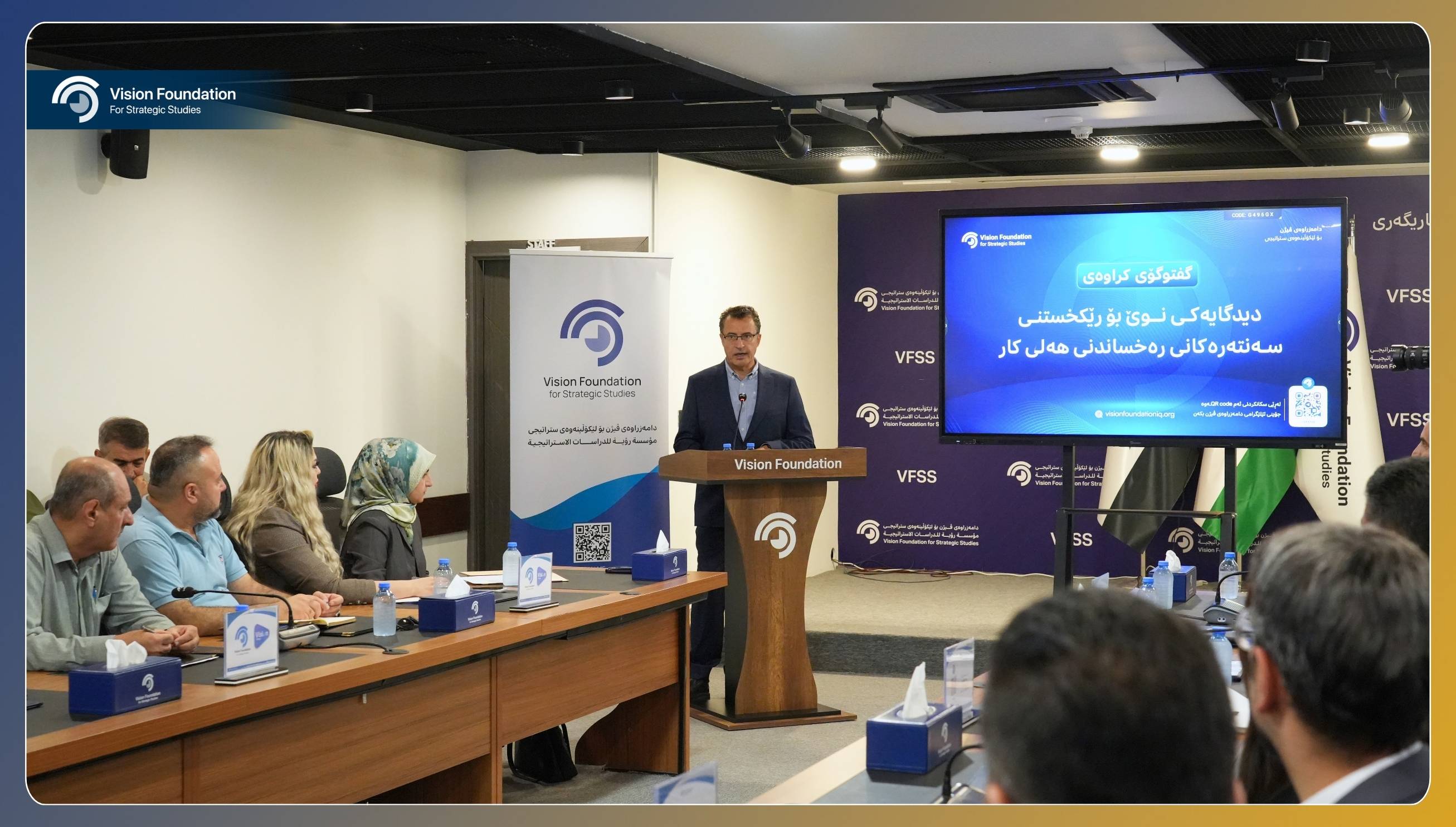
As part of a new effort by Vision Foundation for Strategic Studies to find practical solutions to unemployment and bring job seekers closer to market needs, an open dialogue titled “A New Vision for Organizing Employment Centers” was held.
Academics, economic experts, employers, and labor-market specialists took part, presenting the most pressing challenges and discussing detailed solutions that could mark the beginning of a revival in the job market while also harnessing the abilities of young people who are currently unemployed.
International Experience and the Government’s Role
Hogr Ali, adviser to the Ministry of Labor and Social Affairs, delivered a presentation emphasizing that the private sector is the main engine of the economy and must be regulated through effective laws and institutions.
In his view, the government should establish a unified information system to identify labor-market needs and strengthen coordination among employment centers, trade unions, and the private sector.
He also referred to Article 22 of the Iraqi Constitution, which protects the right to work, regulates relations between workers and employers, and guarantees the right to join trade unions and professional organizations.
Legal and Administrative Barriers
Hemin Nouri, director of Job Center and presenter of the second panel, identified rigid private-sector laws, dual employment—working in both the public and private sectors—and weak oversight as the main obstacles.
He noted that regulating dual employment would create new opportunities for unemployed young people. He also stressed the need to amend the Social Security Law and strengthen oversight of job advertisements published by companies.
Sulaymaniyah City Statistics for 2025
According to employment-office statistics:
1,236 people were placed in jobs.
2,540 people were registered as unemployed.
1,357 projects offered employment opportunities.
There are nine officially licensed employment offices.
There are 13 fraudulent or unlicensed offices.
A total of 256 online pages and accounts are active in the employment sector.
Slower economic growth, limited large-scale investment, regional instability, a mismatch between academic qualifications and market demand, and technology replacing manual labor are among the main causes of declining employment opportunities.
Large Numbers of University Graduates and Unemployment
Dr. Zryan Najat, a university lecturer and the third panelist at Vision Foundation, stressed the importance of continuously developing the skills of students and employees. He noted that information technology is one of the fields offering the greatest number of job opportunities.
He called for direct coordination between universities and employment centers so that education remains connected to the market’s real needs.
Begard Ali, a lecturer at the University of Sulaymaniyah, stated that unemployment in the Kurdistan Region has reached 16%, rising to 29% among women.
She said that because public-sector recruitment has been suspended since 2012, unemployment must be addressed through the private sector.
The Government Is Not Serious
Dr. Abdulfattah Hawrami, director of the Career and Training Center at the University of Sulaymaniyah, criticized the absence of a government plan, citing the suspension of financial entitlements for instructors and trainers involved in summer courses.
He noted that the University of Sulaymaniyah alone has nearly 5,000 students from outside the city. Financial support for summer training could strengthen their skills and expand their employment prospects in districts and subdistricts.
In his view, the solution requires a clear, long-term strategic plan.
Vocational Education Is an Important Solution
Saeed Ahmed, an educational supervisor, highlighted the importance of vocational education, citing Germany as an example, where 54% of learners at the intermediate stage do not proceed to university but choose vocational education instead.
He said greater attention should be given to establishing and developing vocational training centers.
Ala Kamal, representative of the Kurdistan Workers’ Union, called for the protection of the rights of the majority of people working in the labor market.
She emphasized monitoring the enforcement of laws, addressing conflicts of interest, and drafting employment contracts in Kurdish.
The Future Is Not Limited to the Public Sector
Przha Aso, recruitment manager at Halabja Group of Companies, stressed that some university departments no longer correspond to labor-market demand and should therefore be reviewed.
In her view, young people must understand that the future of work is not confined to the public sector and that the private sector also creates genuine opportunities.
Conflicting Instructions Are a Problem
Rebin Aziz, a labor inspector, considers conflicting ministerial instructions a serious problem. For example, Ministry of Labor guidelines allow 30% of government employees to work in private schools, while Ministry of Education guidelines set the figure at 50%.
He proposed holding a broad conference to unify the guidelines and address the issue.
Proposed Measures
Create a unified database of employment opportunities and market needs.
Harmonize laws and regulations related to the private sector and employment centers.
Strengthen links among universities, employment centers, the private sector, and trade unions.
Develop vocational education and training in line with market demand.
Amend the Social Security Law and encourage private-sector employment.
Vision Foundation for Strategic Studies will incorporate the dialogue’s observations and proposals into a policy paper and submit it to decision-makers, with the aim of turning the discussion into implementable policy and practical steps to reduce unemployment in the Kurdistan Region.
That Is Not All
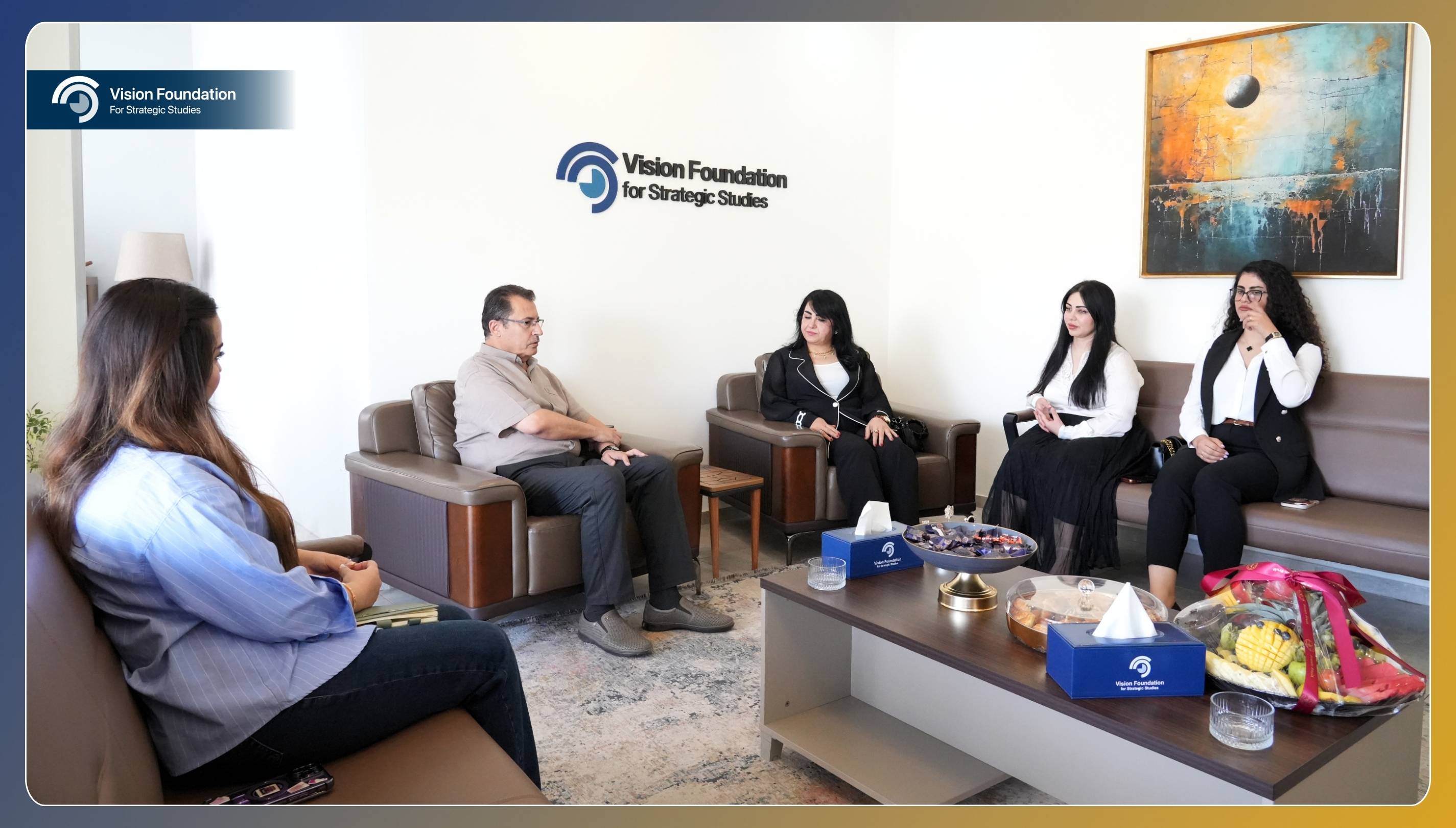
During Vision’s event, the Social Advisory Board was formally announced as part of efforts to broaden the Foundation’s scope of work and strengthen its role in developing solutions to important societal issues.
The Board will be chaired by Professor Dr. Zia Abbas, a researcher and university professor, and will focus primarily on issues related to families, children, women, and social change.
The establishment of the Board is part of Vision Foundation’s broader vision to bring research and scientific knowledge into decision-making and transform them into practical solutions and policies—a vision that consolidates Vision’s position as a strong center for research, dialogue, and policymaking in the Kurdistan Region and Iraq.
260722075704.jpg)
260722074450.png)
Share