Vision Foundation participates 'In Search of a New Social Contract in the Middle East’s conference
9 November 2026
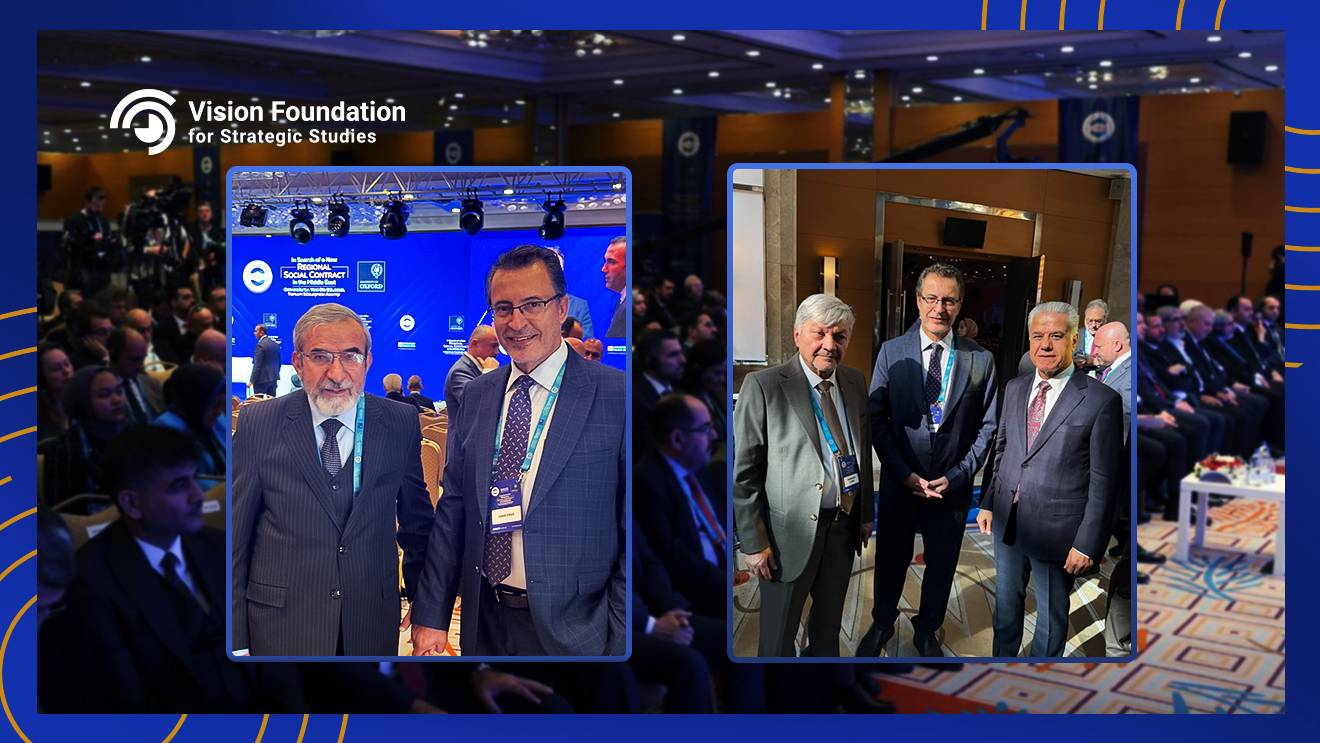
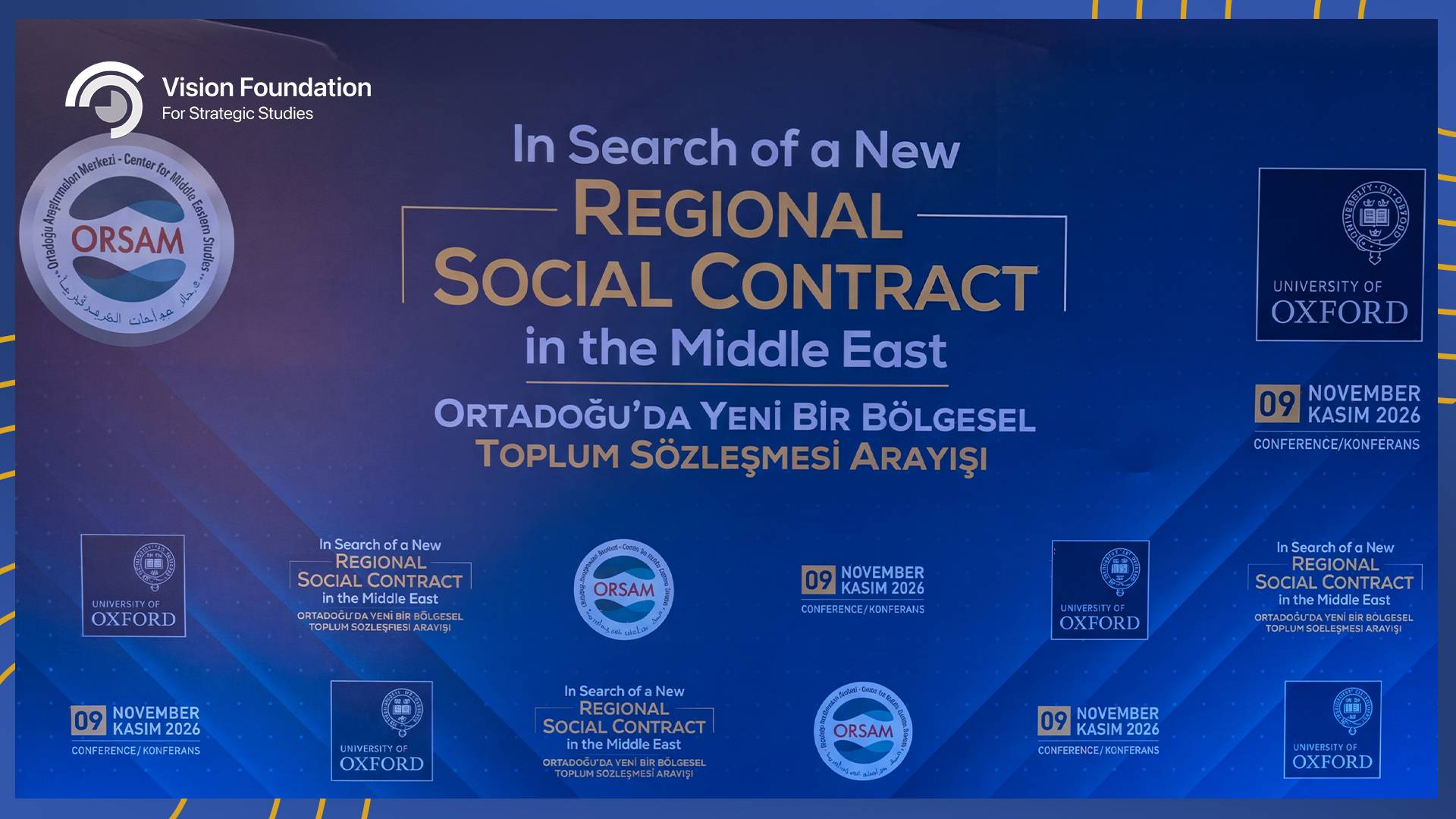
Vision Foundation alongside a prominent group of research centers, academics, diplomats, decision-makers, and political figures participated in a joint conference organized by the Center for Middle Eastern Studies (ORSAM) and the Global System Program at the University of Oxford to discuss the prospects of a new social contract in the Middle East.
Held on November 8–9, 2026, in the Turkish capital, Ankara, the seminar—titled "In Search of a New Social Contract in the Middle East" featured Adnan Osman, President of Vision Foundation, as a keynote panelist.
Discussions Held Under the Chatham House Rule
The seminar and its proceedings were conducted under the Chatham House Rule to foster open and candid dialogue, bringing together decision-makers, diplomats, political leaders, and prominent strategic institutes, including the Kurdistan Region-based Vision Foundation for Strategic Studies.
Four Working Groups Addressed Four Core Pillars
The working sessions were structured across four thematic groups and specialized panels:
Group 1: "Domestic Impacts in Turkey; A New National Contract?"
Focused on examining the political, legal, constitutional, and social dimensions of the disarmament and dissolution of the Kurdistan Workers' Party (PKK) regarding Turkey’s domestic landscape and the broader future of the Kurdish issue. Core debates centered on redefining regional political identities, domestic political contestation, and restructuring state-society relations in the post-armed conflict era.
Group 2: "Toward a Regional Social Contract; Implications for Iraq, Syria, and the Middle East"
Featuring Adnan Othman as a key speaker, this group examined the end of four decades of armed conflict and its ripple effects across the security landscapes of Iraq and Syria, Kurdish relations with central governments, and the viability of this process as a framework for engaging non-state actors. Participants included diplomatic and policy representatives from the Kurdistan Region (the Presidency, the KRG, and research institutes) alongside regional figures from Iraq, Iran, and Syria.
Group 3: "International Dimensions; Peacebuilding and the Global Order"
Addressed the shift in global power dynamics (involving the US, Russia, and the EU), the re-evaluation of Washington’s partnership with the Syrian Democratic Forces (SDF), and the geopolitical standing of Kurds internationally.
Group 4: "The Turkish Model in Parallel with Global Conflict Resolution; Mutual Learning
Offered a comparative evaluation of Turkey’s experience against global conflict resolution frameworks, identifying structural strengths, limitations, and key policy takeaways
Strategic Implications and Outcomes
The outcomes of this conference carry multi-layered strategic implications
For Turkey’s domestic landscape: These discussions can serve as an entry point for drafting post-disarmament legal frameworks, transitioning Turkish-Kurdish tensions into civil and parliamentary engagement, and de-escalating nationalist polarization.
For Iraq and the Kurdistan Region: The process could curtail cross-border military operations, enhance security coordination between Ankara, Baghdad, and Erbil, and accelerate strategic economic connectivity, such as the Development Road Project.
Turkey's Peace Process Goes Beyond Domestic Politics
The collaborative convening of leading international and regional think tanks underscores that the disarmament of the PKK and the Turkish peace track constitute far more than a localized military or political settlement. Rather, they represent a pivotal historical and geopolitical transition capable of establishing a roadmap for a new socio-political contract across the Middle East.
Share