Obstacles Facing the Kurdistan Region’s Share in Iraq’s 2027 Budget Discussed
28 October 2026
Vision Foundation
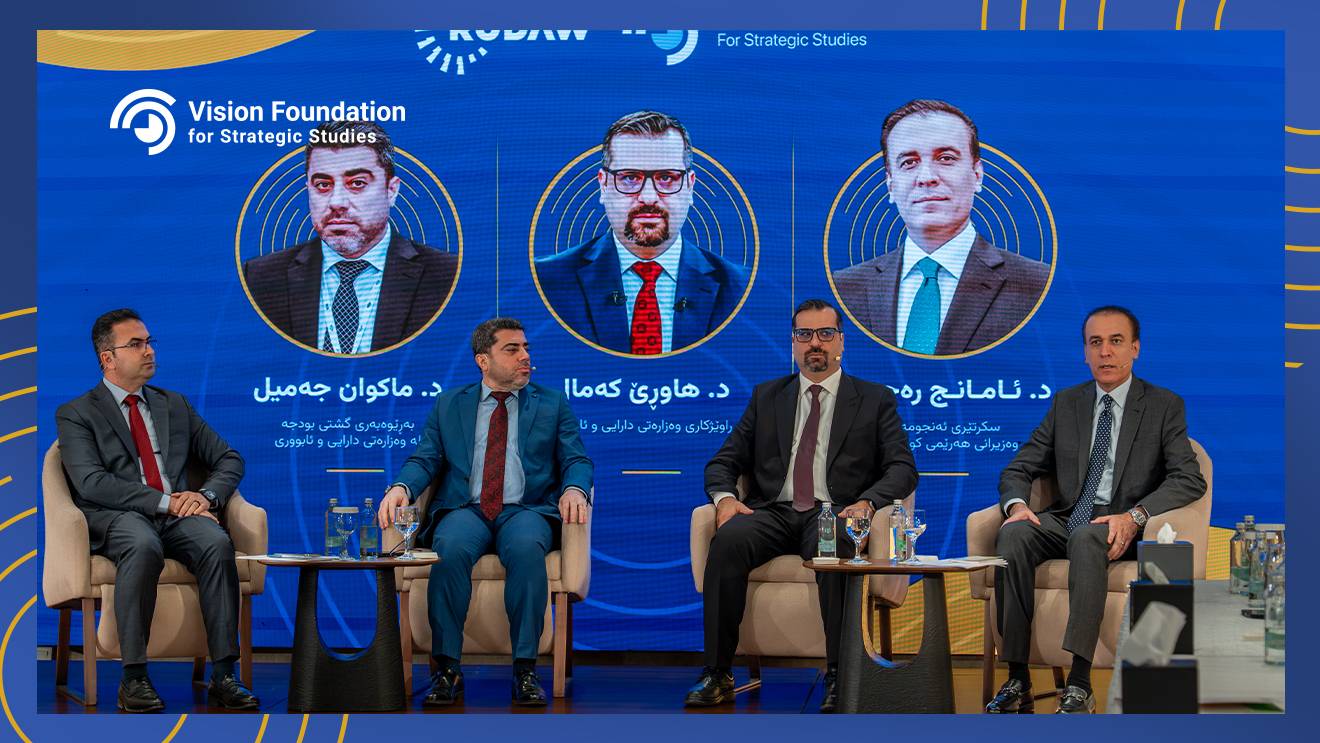
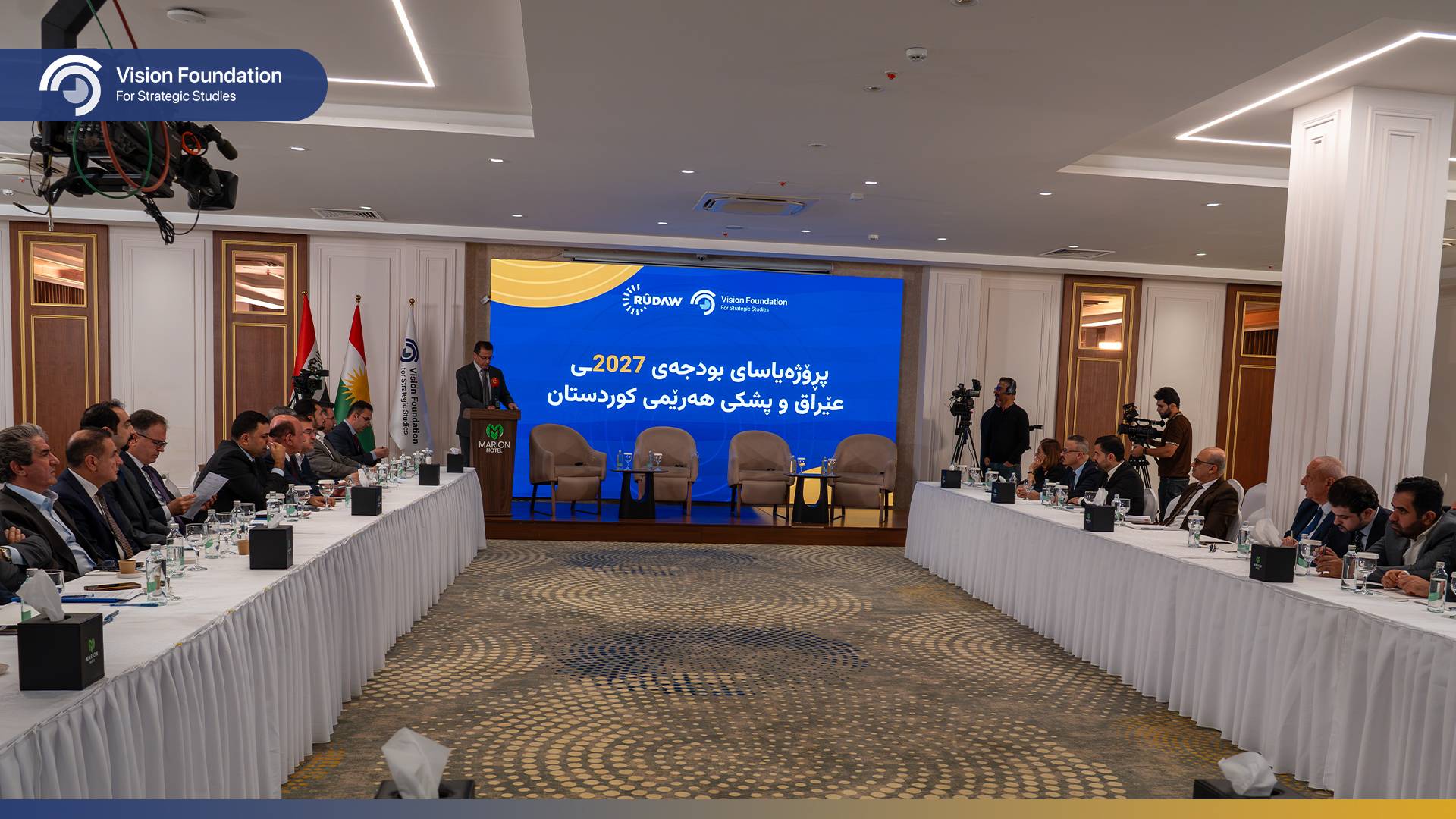
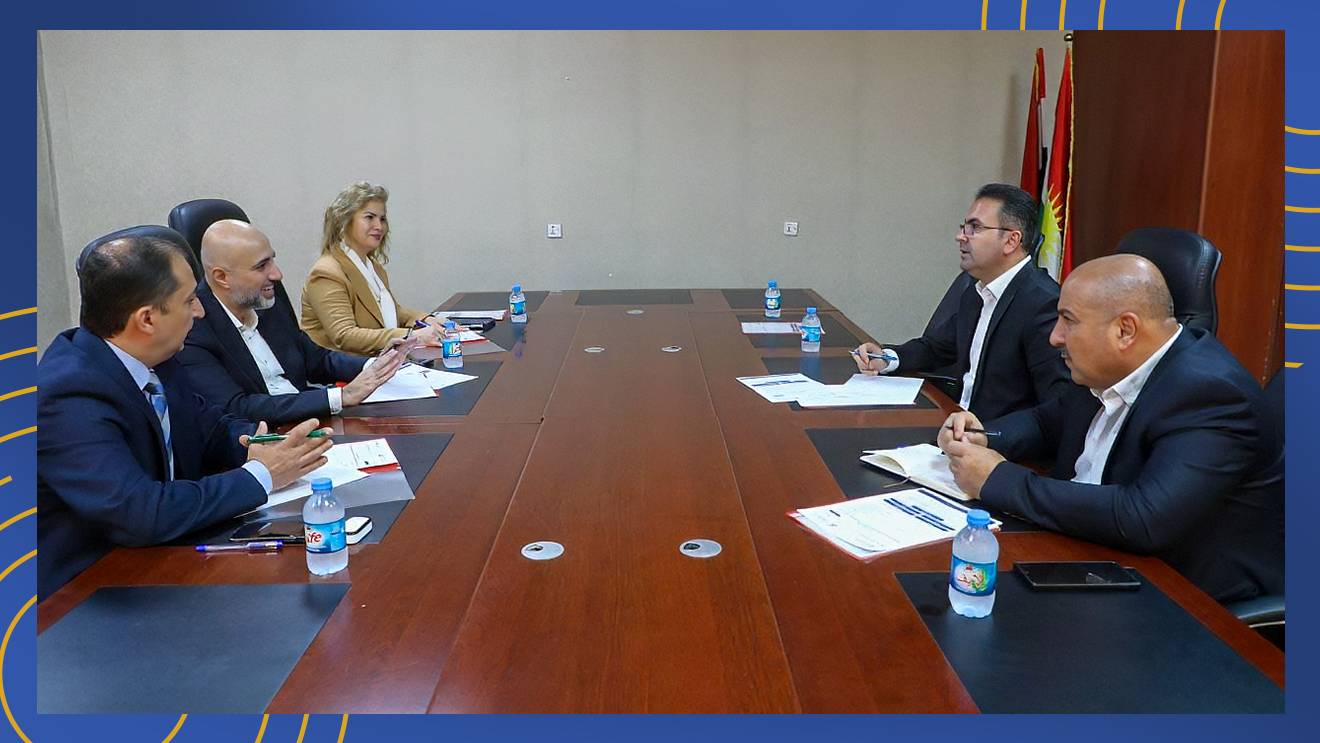
With the participation of the Kurdistan Region’s negotiating delegation, Vision Foundation for Strategic Studies organized a roundtable and open forum bringing together officials, legal, constitutional, and economic experts, and journalists. The discussion focused on drafting the 2027 Iraqi Federal General Budget, examining the Kurdistan Region’s entitlements and share, as well as exploring legal obstacles and viable solutions.
On Monday, October 26, 2026, in Erbil, senior officials from the Kurdistan Regional Government (KRG), legal and financial experts, and members of the Erbil-Baghdad negotiating team held an intensive session regarding the preparation and review mechanisms of the 2027 draft budget law, with an emphasis on anchoring the constitutional rights of the Kurdistan Region. The primary goal was to forge a unified stance among Kurdish parties to guarantee all financial entitlements and remove restrictive legal conditions embedded within the budget text.
Baghdad’s Constraints in the 2027 Budget
Dr. Amanj Raheem, Secretary of the KRG Council of Ministers and member of the negotiating delegation, noted that the draft budget law dedicates only a single article to the Region—Article 10. He pointed out that while budgets consist of numbers and legal texts, heavily restricted legal texts render the numbers mere ink on paper. He emphasized that population percentage is less critical than how the clauses govern the release of entitlements. Article 10 imposes demanding conditions, including the daily export of 400,000 barrels of crude oil and the handover of all non-oil revenues; failure to meet these terms halts funding, thereby tying the allocated share to substantial barriers.
Salaries and Promotions Between Laws and Rulings
Dr. Hawre Kamal, advisor to the KRG Ministry of Finance and Economy, stated that civil servant salaries were decoupled from political disputes by a Federal Supreme Court ruling, requiring regional employees to have the same rights as their federal counterparts. Regarding employee promotions (career advancements), he disclosed that the KRG requested Baghdad to implement all accrued promotions at once in the 2027 budget. However, this was subsequently split into three phases: 2016–2020 dues in 2027, 2020–2024 dues in 2028, and 2024–2028 dues in 2029. He remarked, "Although this was agreed upon in a joint meeting protocol, current draft figures suggest it will be difficult to execute." He also addressed the denial of the 12-month end-of-service gratuity and 6-month accumulated leave compensation for KRG retirees, entitlements that are routinely paid to retirees in central and southern Iraq.
Technical Negotiations and Financial Entitlements
Dr. Makwan Jamil, Director General of Budget at the KRG Ministry of Finance and member of the negotiating team, reviewed the ongoing talks. He stated that the technical and financial delegation had been working in Baghdad since August 2026, submitting all necessary documentation, data, and payroll records to joint committees. Highlighting significant disparities in benefits, he stated: "Approximately 1 trillion Iraqi dinars are needed to bridge the entitlement gap for KRG public employees, political prisoners, families of martyrs, and the Peshmerga compared to the Iraqi Army." He urged Kurdish factions in the Iraqi Parliament to unite in securing these rights within the budget law.
Federal Supreme Court Pressures on the Region’s Status
Dr. Rewaz Fayaq, former Speaker of the Kurdistan Parliament, warned of the continuous risks posed by Federal Supreme Court decisions that progressively strip the Kurdistan Region of its authorities. She stated that core constitutional powers are being incrementally revoked, demanding a unified stance and rigorous legal review by specialists.
Demographic Risks in the Budget Formula
Hawre Tawfiq, Head of the Relations Department at the Iraqi Presidency, noted that the issues are fundamentally political, requiring fresh avenues for resolution. He warned that insisting on a 14% budget share is a double-edged sword: while offering immediate fiscal gains, it could serve as a de facto acceptance of demographic changes prior to the implementation of Article 140 and the normalization of disputed territories.
Deficit Risks
Dr. Ahmed Abdulrahman, an economic researcher, described the 2027 draft budget as the most concerning in years. He pointed out a 43-trillion dinar deficit and highlighted the complete absence of new investment projects except in the electricity sector—noting that most line items merely cover unfinished projects carried over from prior years.
Neglect of the Non-Oil Economy
Pakhshan Zangana, politician and former parliamentarian, emphasized the weakness of the Region's non-oil economic infrastructure over the past decade. She noted that the KRG had failed to establish a self-sustaining foundation to buffer against Baghdad's pressures. Stressing the availability of human and material resources, she added: "Passing the Federal Oil and Gas Law in Parliament remains the decisive step to resolve financial, legal, and administrative disputes."
Baghdad’s Pressure and the Legislative Vacuum
Nishtiman Kamal, politician and economic analyst, highlighted efforts by the federal government to dilute the constitutional concept of the "Region." She stated that internal Kurdish political fractures and international dynamics have facilitated this process, pointing out that the absence of an active Kurdistan Parliament removes a crucial legislative authority that historically defended the Region's budget rights.
Enforcement of legal and judicial authority
Hiwa Hamid, legal advisor to the Kurdistan Parliament, highlighted that budget formulation dynamics shifted post-2015: political agreements once the primary reference have been largely replaced by rigid statutory provisions and rulings from the Federal Court and the State Council, significantly curtailing the Region's political maneuvering room.
Vision Foundation concluded by reiterating that the roundtable aimed to forge consensus among diverse factions, offering a collaborative platform for negotiators and subject-matter experts to secure the Kurdistan Region's constitutional rights and financial entitlements in Iraq's 2027 General Budget.

Share